

A straightforward explanation for households with solar panels
Short answer: sometimes, but certainly not always.
From 1 January 2027, the Dutch net-metering scheme will end. That makes using your own solar electricity directly more attractive financially. A home battery can help by storing electricity generated during the day for use later. But a battery is expensive, loses some energy and gradually wears out. The answer to “is it worth it?” is therefore different for every household.
1. What changes in 2027?
The Dutch government will end net metering on 1 January 2027. From then on, you can no longer offset electricity exported to the grid against electricity you import later. For all electricity you import, you will again pay the normal supply tariff, energy tax and VAT. You receive compensation for electricity you export. Until 2030, that compensation must be at least 50% of the supply tariff excluding taxes.
This makes direct self-consumption more important than before.
2. What does a home battery actually do?
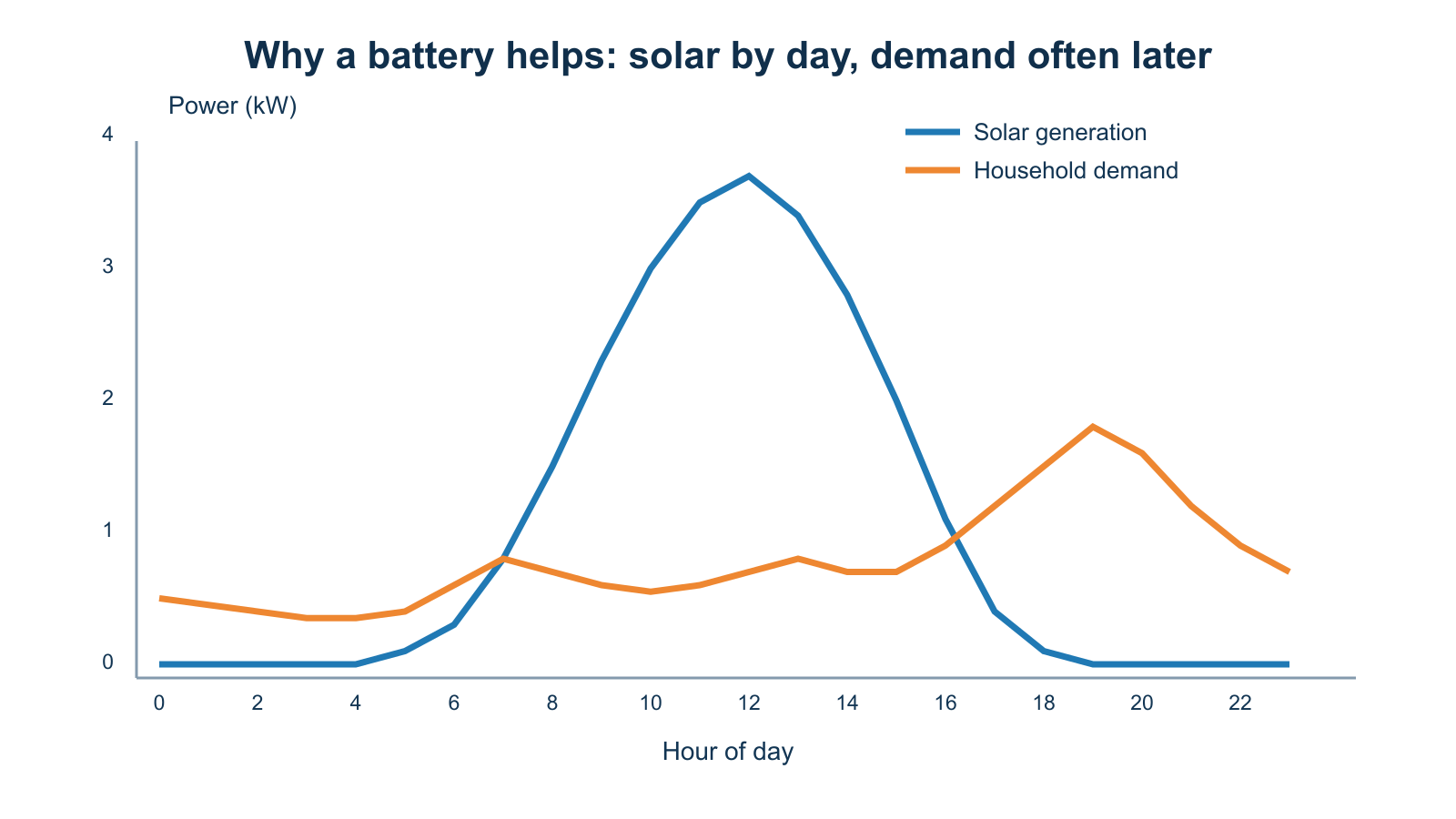
A home battery temporarily stores electricity. In practice, the sequence is usually:
- your solar panels generate electricity during the day;
- you first use electricity directly in the home;
- surplus electricity charges the battery;
- only when the battery is full do you export electricity to the grid;
- later in the day, you use the stored electricity.
The battery does not generate extra electricity. Above all, it shifts when you use it: from daytime to the evening or early morning.
3. Why does a battery become more attractive after 2027?
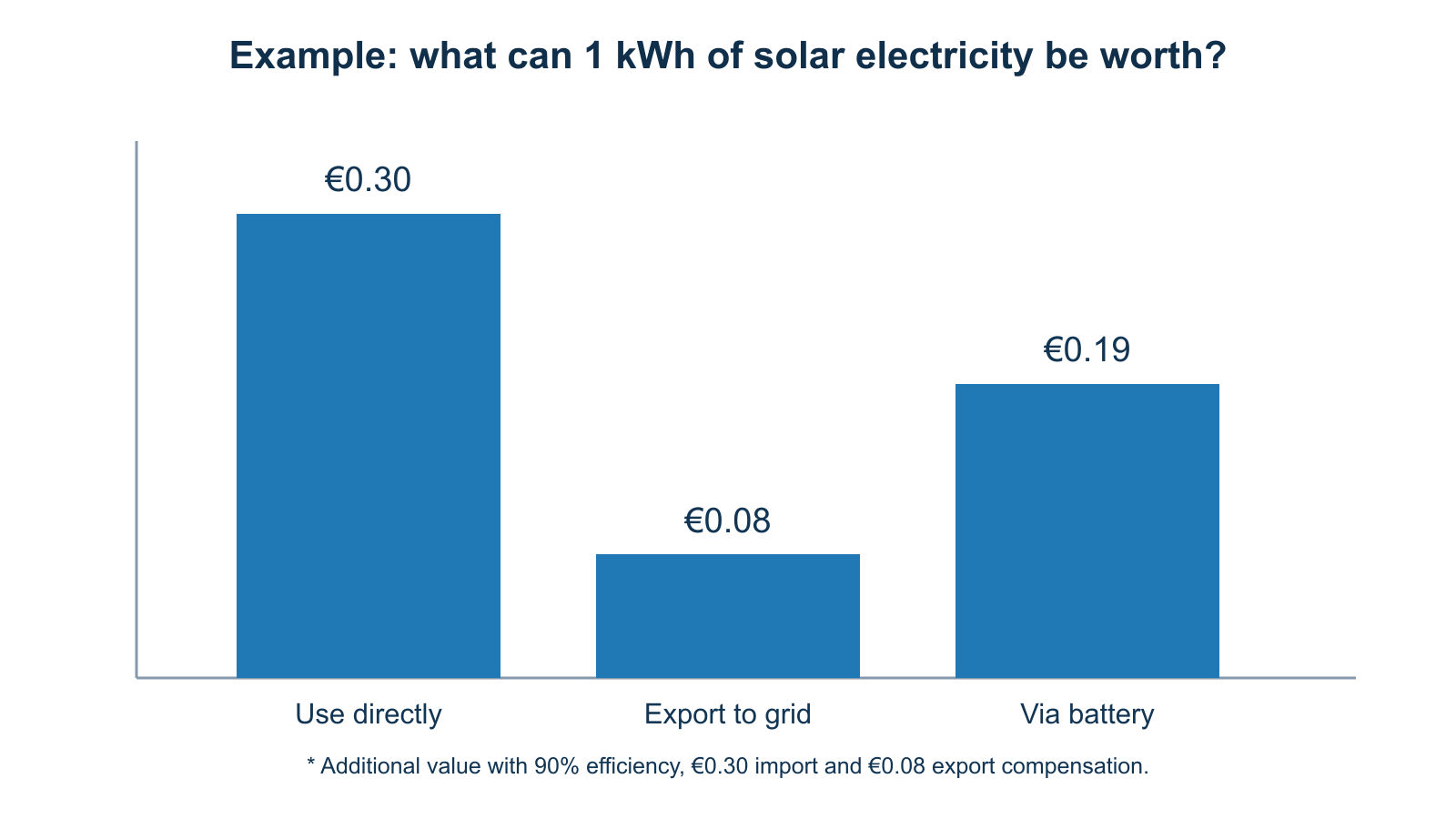
Without net metering, a kWh you use yourself is worth more than a kWh you export.
Here is a simple example using fictional amounts:
- electricity imported from the grid: €0.30 per kWh;
- export compensation: €0.08 per kWh;
- battery round-trip efficiency: 90%.
If you export 1 kWh of solar electricity directly, you receive €0.08. If you use that electricity later through the battery, you avoid buying about 0.9 × €0.30 = €0.27 of electricity. The additional value of storage compared with direct export is therefore approximately €0.19 per kWh shifted through the battery.
4. This is also the limitation
€0.19 sounds worthwhile, but a home battery often costs several thousand euros. You therefore need many cycles and plenty of useful use to recover the investment.
What matters is not just:
- how large the battery is;
- but especially how many kWh you actually put through it usefully each year.
A 10 kWh battery that is rarely used pays for itself much more slowly than a smaller battery used frequently and intelligently.

5. A simple calculation
Suppose:
- your battery shifts 1,000 kWh per year from daytime to the evening;
- you gain a net €0.19 per shifted kWh compared with direct export.
The annual financial gain is:
1,000 × €0.19 = €190 per year.
If the battery, including installation, costs €5,000, the simple payback period is more than 26 years. That is longer than many people expect.
| Assumption | Fictional value |
|---|---|
| Grid import price | €0.30 per kWh |
| Export compensation | €0.08 per kWh |
| Battery efficiency | 90% |
| Usefully shifted electricity | 1,000 kWh per year |
| Additional value per shifted kWh | €0.19 |
| Annual saving | €190 |
| Purchase and installation | €5,000 |
| Simple payback period | More than 26 years |
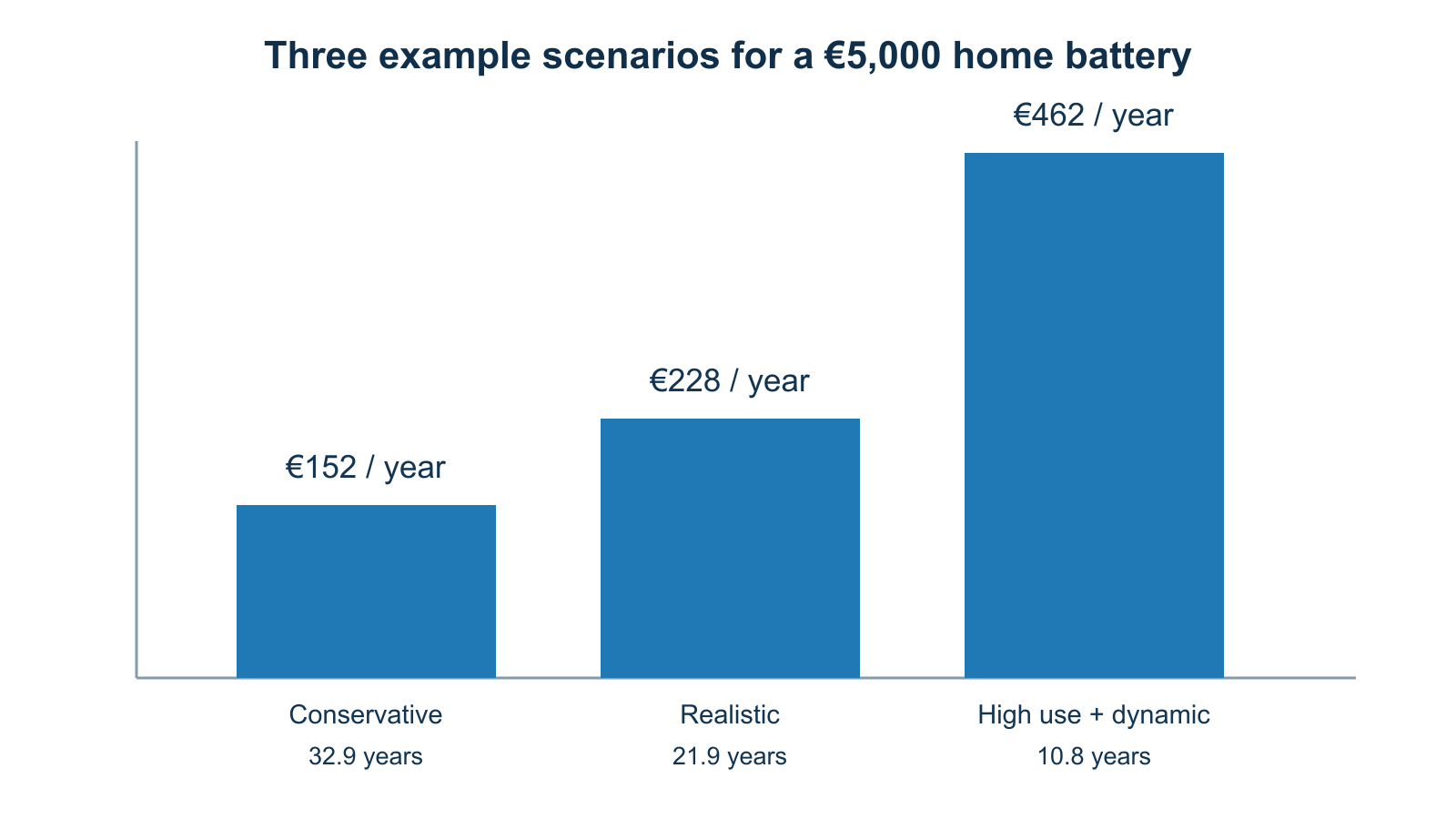
6. Three example scenarios
Conservative
- 800 kWh usefully shifted per year;
- annual gain: approximately €152;
- simple payback with a €5,000 investment: around 33 years.
Realistic
- 1,200 kWh usefully shifted per year;
- annual gain: approximately €228;
- simple payback: around 22 years.
High use plus a dynamic contract
- 1,800 kWh usefully shifted per year;
- additional gain from smart charging and discharging at dynamic prices;
- annual gain: approximately €462;
- simple payback: around 11 years.
This last scenario is clearly more favourable, but requires high utilisation, smart energy management and suitable price differences.
7. When is a home battery usually not worth it?
Often it is not, or only after a long time, when:
- your battery is too large for your actual surplus;
- you already use a lot of solar electricity directly during the day;
- you have little solar electricity left to store;
- the battery is expensive;
- you have no dynamic contract and hardly benefit from price differences;
- the battery makes few cycles per year;
- you assume an overly optimistic lifespan or residual value.
8. When might a home battery become more attractive?
A battery becomes more attractive when several conditions work in your favour:
- you have solar panels that regularly generate a surplus;
- you use most electricity in the evening;
- you can use a large part of the battery almost every day;
- you have a smart energy-management system;
- you might combine it with a dynamic contract;
- you have additional loads such as a heat-pump water heater, heat pump or electric car;
- the purchase price is competitive.
9. Choosing a size: smaller is often smarter
Many people automatically assume bigger is better. Financially, that is far from always true.
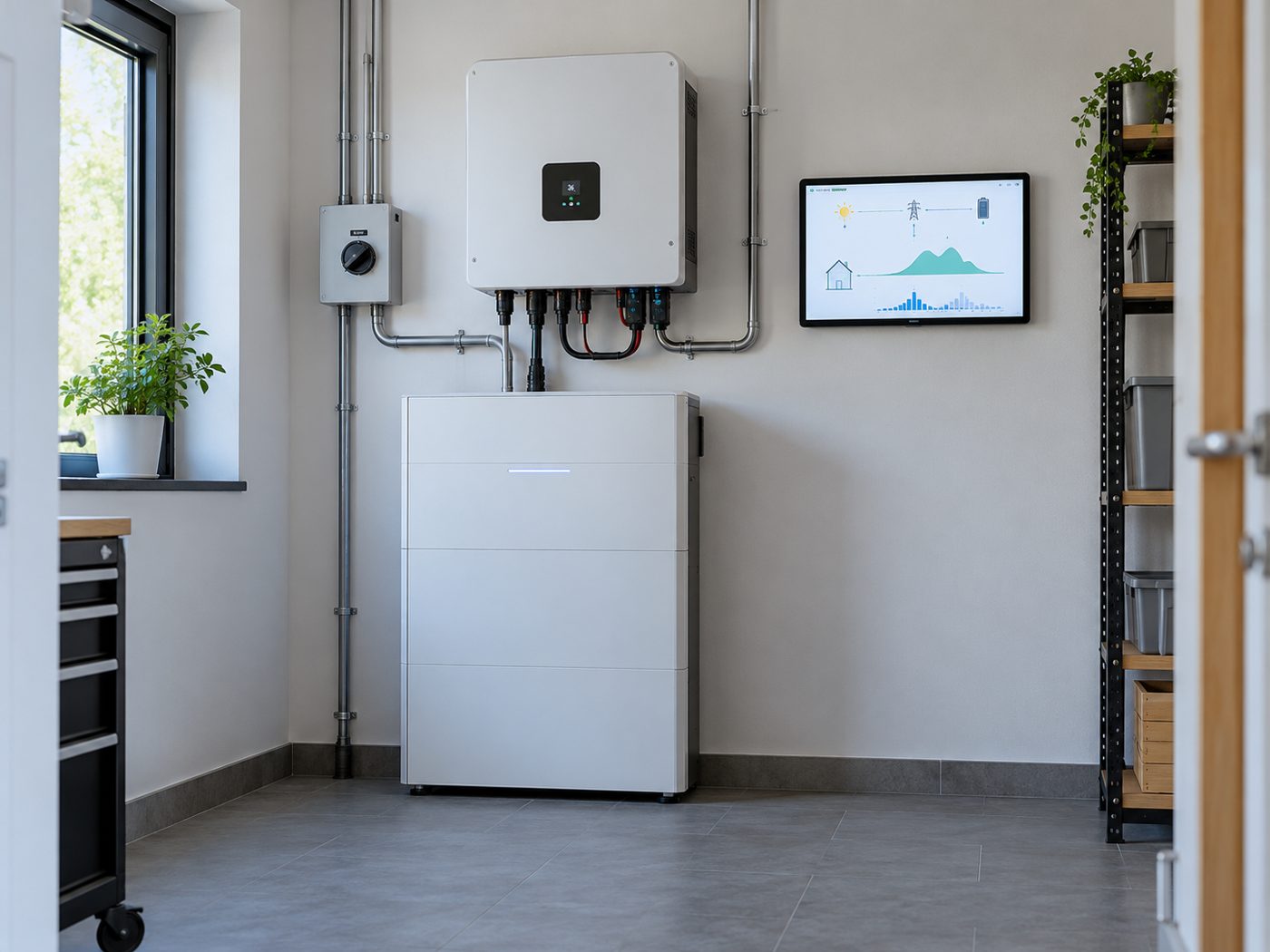
An oversized battery sits partly unused for much of the year. You then pay for capacity that you rarely use. For many households with solar panels, a more compact battery therefore makes more sense than a very large system.
10. Losses and wear
A home battery is not a perfect bucket.
Allow for:
- charging and discharging losses;
- conversion losses in the inverter and system;
- capacity loss over the years;
- a limited warranty in years, cycles or remaining capacity.
In practice, the payback period is therefore often somewhat worse than a polished sales presentation suggests.
11. Subsidy and VAT: what are the rules?
No ISDE subsidy
At the time of this article, there is no ISDE subsidy for a home battery.
VAT recovery is sometimes possible
According to the Dutch Tax Administration, under certain conditions you can recover VAT on the purchase and installation. This applies particularly when you use the home battery to buy and sell electricity through an energy-management system and are therefore an entrepreneur for VAT purposes.
Importantly, this does not mean “everyone can recover the VAT”. Conditions and later VAT adjustments apply, especially for private use.
12. Beware of promises that sound too good
The Netherlands Authority for Consumers and Markets (ACM) has previously warned about unclear advertising for home batteries. That warning is justified. Always ask about:
- the assumptions behind the calculation;
- expected cycles per year;
- the electricity price and export compensation used;
- warranty terms;
- expected degradation;
- whether automatic trading at dynamic prices is actually included;
- maintenance, replacement and monitoring.
13. What should you check before buying?
Use this checklist:
- How much of my solar electricity do I currently use myself?
- How much solar electricity do I actually export now?
- At what times do I export it?
- How much of it can I really use later?
- What is the fully installed battery price?
- What is its usable capacity?
- What is the overall system efficiency?
- What warranty do I get?
- Does it provide backup power, or only storage?
- Can the battery be installed safely in my home and electrical installation?
14. An honest conclusion
For most households, a home battery becomes more logical after 2027, but it is not automatically profitable.
Often this means:
- without a dynamic contract and frequent daily use, payback is often slow;
- smart use, favourable price differences and a well-sized battery can make it more attractive;
- the best choice is usually not the largest battery, but the one that fits your exports and evening consumption.
15. The simplest summary
A home battery can save money, but only if you use it often and intelligently.

After 2027, every additional kWh you use yourself becomes more valuable. That makes storage more appealing. But the investment remains high. So do not ask only “How much will I save?”; above all, ask “How many kWh will I actually store and use usefully each year?”
Sources (official background)
- Dutch government – Net-metering scheme ends in 2027
https://www.rijksoverheid.nl/themas/klimaat-milieu-en-natuur/energie-thuis/salderingsregeling - ACM ConsuWijzer – Net metering and electricity export
https://consument.acm.nl/elektriciteit-en-gas/duurzame-energie/wat-is-salderen - Netherlands Enterprise Agency (RVO) – ISDE (no subsidy for home batteries)
https://www.rvo.nl/subsidies-financiering/isde - Dutch Tax Administration – Home batteries and VAT
https://www.belastingdienst.nl/wps/wcm/connect/nl/btw/content/thuisbatterij-btw - ACM – Warning about unclear home-battery advertising
https://www.acm.nl/nl/publicaties/acm-waarschuwt-voor-onduidelijke-reclames-thuisbatterijen