

A smart home does not automatically save money. It can help prevent wasted energy: heating an empty house, lighting an unoccupied room or running an appliance at an expensive time. Measure first, then automate. In Home Assistant, a simple rule is IF something happens, optionally CHECK a condition, THEN perform an action.
Home Assistant can run on, for example, Home Assistant Green, a Raspberry Pi, mini PC or NUC. You need readable devices or sensors for temperature, motion, doors and windows, smart plugs, meters or solar production; some rules also need a controllable thermostat, light, plug or EV charger. A P1 connection or other electricity meter is useful for insight, but not required for the simplest rule. The real gain is usually less waste rather than a spectacular trick.
For scale, 10 watts running continuously uses 87.6 kWh per year. At an example price of €0.30 per kWh, that is about €26. Actual savings depend on your home, tariff, equipment and habits; these examples are not guaranteed savings claims.
Several small loads can add up, while one supposedly wasteful device may actually draw very little. Measure before deciding. That is why this guide avoids a universal 'save up to €500 a year' promise: homes, contracts, comfort and equipment differ too much.
1. Lower heating when nobody is home
IF the home really is empty or everybody is asleep, CHECK the current temperature and THEN lower the setpoint. You need a controllable thermostat and reliable occupancy detection. Do not let the house cool excessively: that may be uncomfortable and is not automatically more efficient.
Occupancy can be inferred from phones, an alarm state, door contacts or a combination. Warm the home gently again for arrival. Heating is often a large energy cost, so a modest and reliable occupancy rule may matter more than many small plug automations. Deep cooling followed by hard reheating is not necessarily cheaper, especially with slow systems.

2. Pause heating when a window is open
After a door or window sensor reports an opening for, say, two minutes, pause or lower heating in that room. Restore it when the window closes. A short delay avoids disrupting the system for a door opened only briefly.
A controllable radiator valve or room thermostat is ideal. Check that heating in that room is actually active before acting. This prevents the familiar waste of a warm radiator beneath an open window, especially in bedrooms and bathrooms. Test the return behaviour after the window closes so the room is not left cold accidentally.

3. Use lighting only when needed
Combine motion with a light-level condition: IF someone enters and it is dark, turn on the light; switch it off after a suitable period with no occupancy. Set the delay for each room. Someone can sit still in a living room, so an overly short timer is annoying.
You need a smart light, dimmer or switch actuator and a motion sensor; a light sensor improves the condition. Without a light-level check, motion also switches lights on during a sunny afternoon. A toilet may need a short timeout, while a living room needs longer because a person can be present without moving much.


4. Safely cut standby consumption
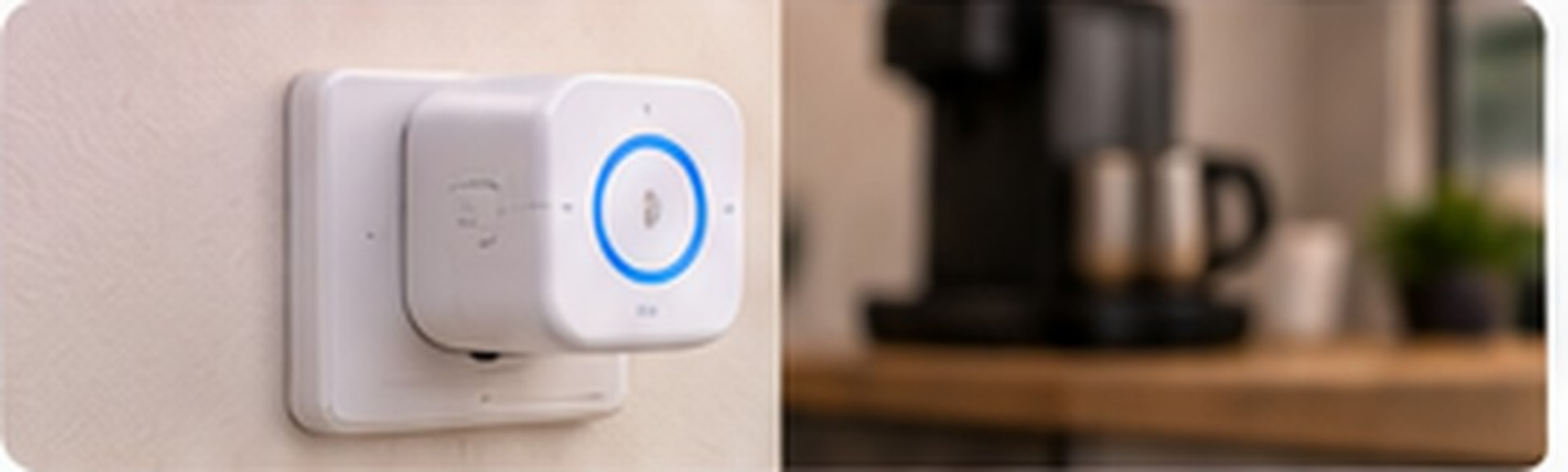
Measure first with an energy-monitoring smart plug. Only switch off appliances that can safely lose power completely. A continuous 25 watts is 219 kWh per year; multiply by your own energy price. Never blindly switch off a refrigerator, freezer, medical device, network equipment or other critical appliance.
A rule may switch the plug off at night, on departure or after a sustained standby period, and perhaps on again the next morning. Old audio, office or network devices can draw unexpectedly much, while a suspect television might draw little. Do not automatically cut network equipment just because it consumes energy: understand its role and whether power removal is safe first.
5. Run laundry or dishes at a favourable time
With a dynamic tariff, you may use the same electricity at a cheaper time. Send a low-price notification or use the appliance’s built-in delayed start. Not every machine can or should be started through a smart plug; many do not resume a programme after losing power. With a fixed tariff, shifting the time usually brings no price benefit.
The rule starts when laundry or dishes are ready and may run later. Check for a low price or suitable time window. An official device integration or built-in delayed start is generally safer than cutting mains power. Savings come from the price difference, not from using fewer kWh; with a fixed price, scheduling can be convenient but is normally not cheaper.
6. Use surplus solar power
Read solar production and grid import/export. Start a flexible load only when the surplus is large enough and lasts long enough. A threshold and delay prevent constant switching as clouds pass. The financial benefit depends on your contract and export value.
Potential loads include a controllable boiler, dishwasher or EV charger, provided control is safe and compatible. The trigger is production exceeding current household use, while the condition requires a meaningful sustained surplus. One sunny second or a passing cloud should not cause repeated switching. Self-consumption is most attractive when using your own solar electricity is worth more than the export compensation.
7. Schedule a boiler safely
A controllable water heater may be able to heat when electricity is cheap or solar output is high. Keep temperature limits, hygiene and legionella programmes, and device safeguards intact. Use only suitable, safe control with adequate temperature and status information.
Hot water can act as an energy buffer: move heating to a favourable period without users noticing when the energy was consumed. Check that the water is not already at target temperature and all safety limits permit heating. Choose a controllable boiler or heat-pump water heater, or an appropriate professional switching solution. Device safeguards remain authoritative; never change hygiene limits for savings.

8. Boost ventilation when needed
Use CO₂ or humidity to increase ventilation temporarily, then return to the normal level. Air quality comes before energy savings: do not leave basic ventilation switched off to save a few watts.
You need controllable ventilation and, for example, a CO₂ or humidity sensor. Require the elevated reading to last longer than a brief spike. The system then boosts for a shower or crowded room instead of running at high speed all day. Return to a safe normal baseline, never a prolonged off state.

9. Use shading intelligently
Close blinds or curtains when sun exposure and indoor temperature rise in summer. In colder periods, solar heat may be welcome instead. For external shades, wind sensors and manufacturer safeguards always take priority over a Home Assistant rule.
Sun position or light level helps establish that the sun actually reaches the window. Temperature and season conditions avoid closing shades when free solar heat is useful. In summer this may reduce cooling demand; in cooler months it can be better to let sunshine in. With external shading, wind protection and manual safety always outrank energy optimisation.
10. Alert on unusual energy consumption
Compare an appliance with its normal pattern and start by sending an alert if it uses much more power or runs much longer. The Energy dashboard can help inspect the pattern. Let a person decide what to do; automatic hard shutdown is often less safe when behaviour is unexpected.
Measure per appliance or through the smart meter and gather several days of normal readings first. Possible cases include a pump running continuously, forgotten electric heating, a refrigerator operating unusually long or a device that never returns to standby. An alert draws attention; the Energy dashboard lets you compare hours, days and weeks. With an unknown cause, human judgement is safer than immediately cutting power.

Where should you start?
Start with one familiar problem. Lighting gives immediate feedback, a smart plug helps you measure first, and occupancy-based heating can be the next step. Solar surplus, dynamic prices and boilers require more reliable data and safety attention. Keep ordinary switches and a manual override available. The best automation quietly works in the background.
| Beginner's order | Why it works |
|---|---|
| 1. Lighting | Immediately visible and easy to test. |
| 2. Measure standby use | Learn what devices really draw before switching them. |
| 3. Heating on absence | Potentially meaningful with fairly simple logic. |
| 4. Solar surplus | Useful once generation and grid exchange are reliably measured. |
| 5. Dynamic price, EV or boiler | Add only after the basics work consistently. |
Home Assistant is useful because it combines different brands and data sources into one rule. The thermostat, motion sensor, electricity meter and solar inverter need not share a brand as long as the platform can read and control them reliably. Remember four rules: measure first, automate second, retain manual control and put safety and comfort ahead of a few cents. The best automation is ultimately boring: it works without frequent correction.