
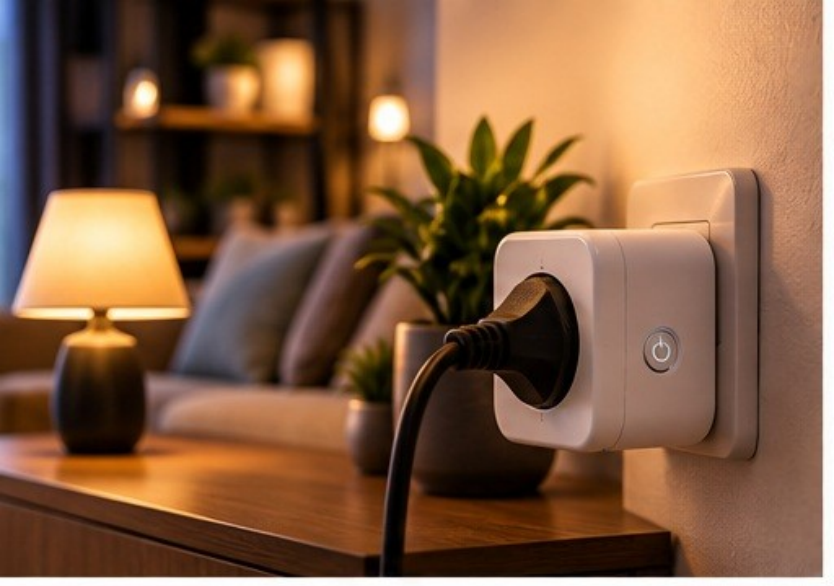
In Home Assistant, a smart plug and a relay may both appear as a switch. Electrically, they are different solutions. Choose first according to the load, the desired function and what must happen during a fault; only then look at brands or protocols.
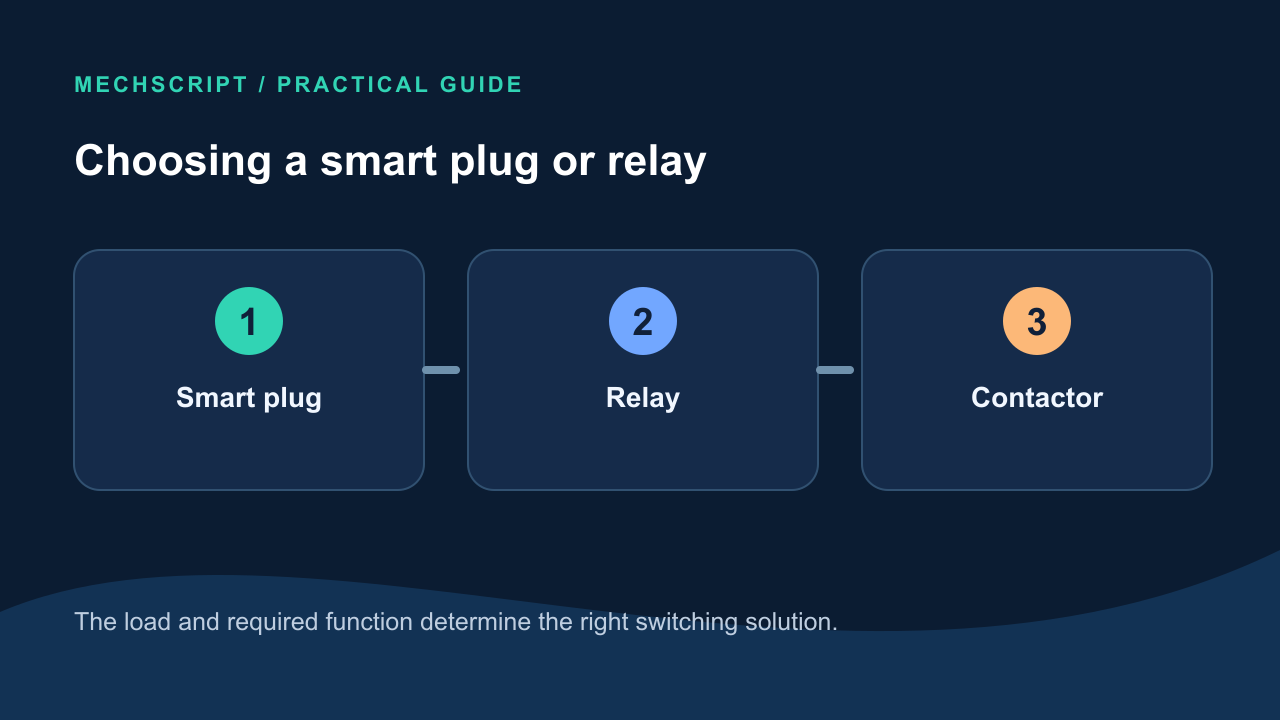
The quick choice
| Situation | Sensible choice | Why |
|---|---|---|
| Plug-in appliance | Smart plug | Reversible, no fixed installation, often energy monitoring. |
| Fixed lighting with an existing switch | Suitable in-wall relay | The physical switch can remain usable. |
| External button or control input | Suitable dry-contact relay | Provides a voltage-free contact, not 230 V. |
| Heavy, inductive or three-phase load | Native control or suitable contactor | A small smart relay does not carry the power itself. |
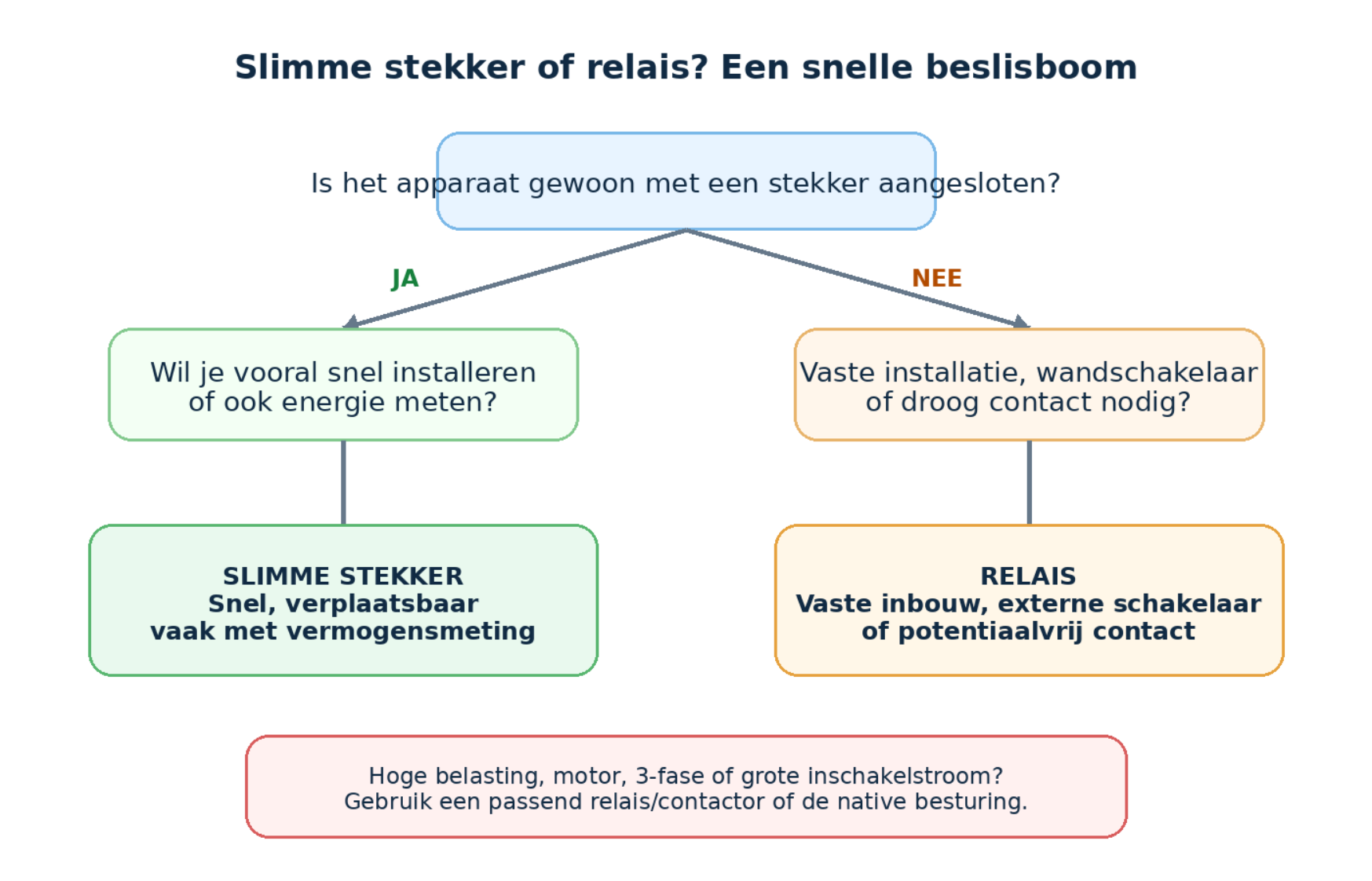
A plug is strongest for loose appliances, reversible installation and W/kWh measurement without built-in wiring. A relay is stronger for fixed lighting, retaining a wall switch and providing a suitable dry contact. Energy monitoring on a relay specifically requires a PM model. For substantial loads, a contactor or native controller remains the main choice. Make this electrical decision before the software decision.
Smart plugs
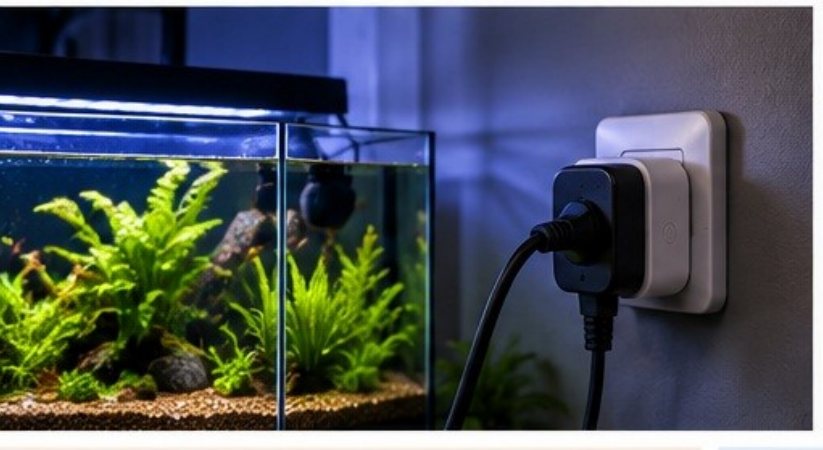
A smart plug interrupts power to a plug-in appliance. It is quick to install, easy to remove and can often measure both W and kWh. It can suit a lamp, AV corner, dehumidifier or an appliance whose activity you mainly want to monitor. Check whether the appliance really restarts after power returns. A smart plug is not a safety isolator and is not suitable as a substitute for a fixed installation.
An advertised 16 A does not mean every motor, pump or LED driver is safe to switch. The rating may apply to resistive loads, while inrush current and contact wear can be much greater for other loads. The supplied guide cites the Plug S Gen3 at 12 A / 2500 W for resistive loads; always check the current datasheet for your exact model and revision.
Chargers and aquarium equipment may also be monitored by a suitable plug, but consider the consequences of losing power. Many plugs switch only one pole and are therefore not safety isolators. A visible intermediary plug is usually not the desired installation for a fixed ceiling lamp or utility room.
Relays and dry contacts
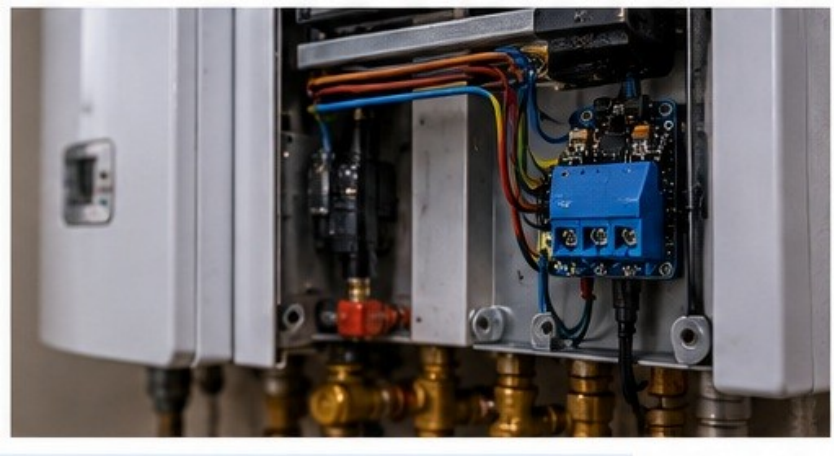
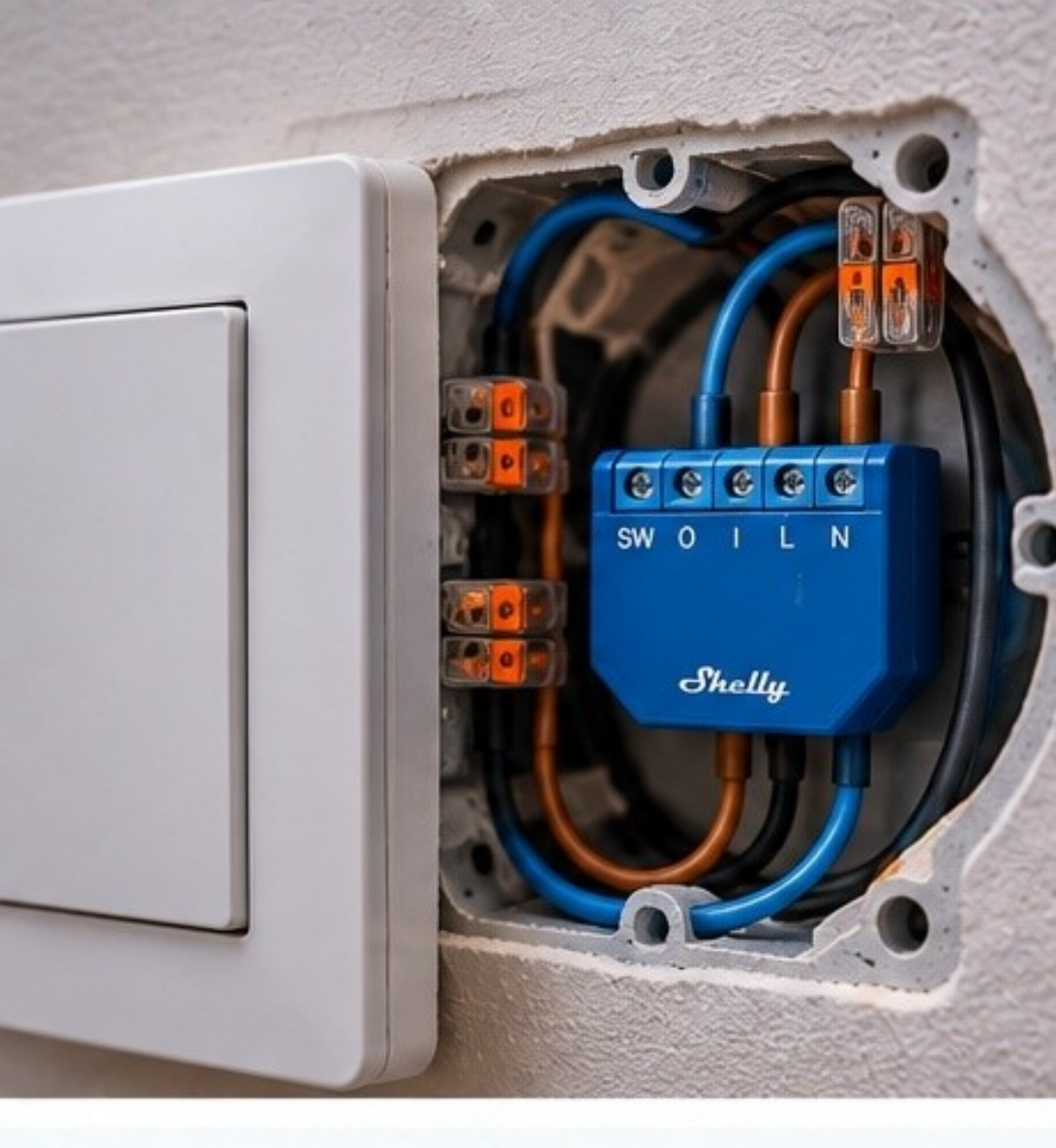
A relay can be placed behind a wall switch, in a cabinet or by a suitable external input. It offers more freedom, but must be installed correctly for electrical and thermal conditions. Check conductor size, terminals, box depth, heat and the maximum contact load.
A DIN-rail solution can be easier to service in a technical cabinet. For blinds and shutters, a specific two-channel interlock can prevent up and down from being active together. Some models let an input operate independently of the output, turning a button press into only a Home Assistant event. Besides electrically correct wiring, check available space, protection rating, suitable connectors and heat dissipation.
A dry contact is galvanically isolated from the module's power supply and behaves like an independent switch. COM is common, NO is open at rest and NC is closed at rest. It can be suitable for a garage door or a designated heat-demand input. Not every smart relay has a dry contact: some PM models pass their supply phase through to the output. Never accidentally apply mains voltage to a low-voltage input; read the internal wiring diagram.
| Terminal | Meaning | Behaviour |
|---|---|---|
| COM | Common | Moving contact. |
| NO | Normally Open | Open at rest; closes on activation. |
| NC | Normally Closed | Closed at rest; opens on activation. |
Let the load determine the design
A resistive heater is generally more predictable than an LED driver with a capacitive inrush peak or a motor or transformer with inductive effects. A washing machine or heat pump is a complex mixed load. Nominal wattage alone tells you too little.
| Load type | Example | What matters |
|---|---|---|
| Resistive | Simple heater or incandescent lamp | Usually predictable current; ratings often refer to this. |
| Capacitive | LED driver or switched-mode supply | Short, high charging current at switch-on. |
| Inductive | Motor, pump, transformer or solenoid valve | Inrush and turn-off voltage spike; contact wear. |
| Complex | Washing machine, heat pump or coffee machine | Several internal loads and electronics. |
For high continuous current, large inrush, frequent switching or three-phase loads, a contactor may be the right power switch. The smart relay then switches only its coil. Sometimes the manufacturer's native control is better still. Hard-switching a refrigerator, freezer, server or central-heating pump to save energy may be harmful or unsafe; measurement is often the smarter feature.
Practical examples
- Floor lamp: smart plug; quick setup with optional energy monitoring.
- Washing machine: monitoring plug as a finished-cycle sensor; do not cut power mid-cycle.
- Ceiling light: suitable in-wall relay so the normal switch remains usable.
- Garage door: intended dry-contact pulse, ideally with door-position feedback.
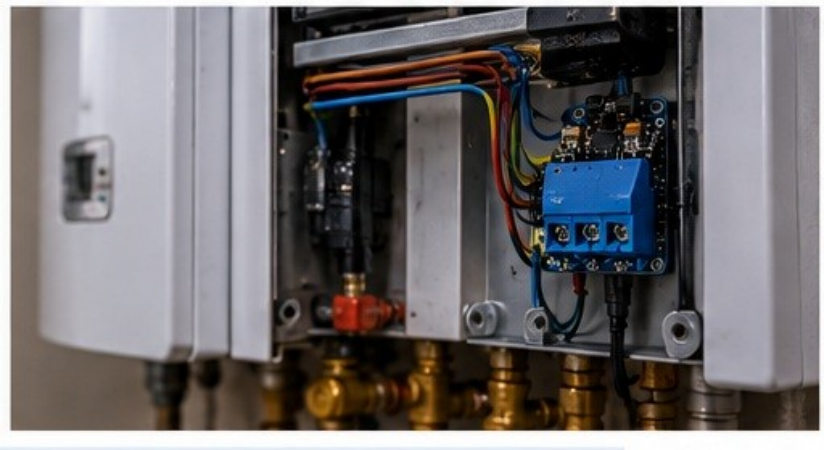
- Boiler or ventilation unit: only the designated control input or native integration; never bypass a safety circuit.
- Garden pump: relay or contactor rated for the motor and its inrush current.
- EV charger: native load control, not a general smart plug or hobby relay in the power line.
Consider installation and failures in advance
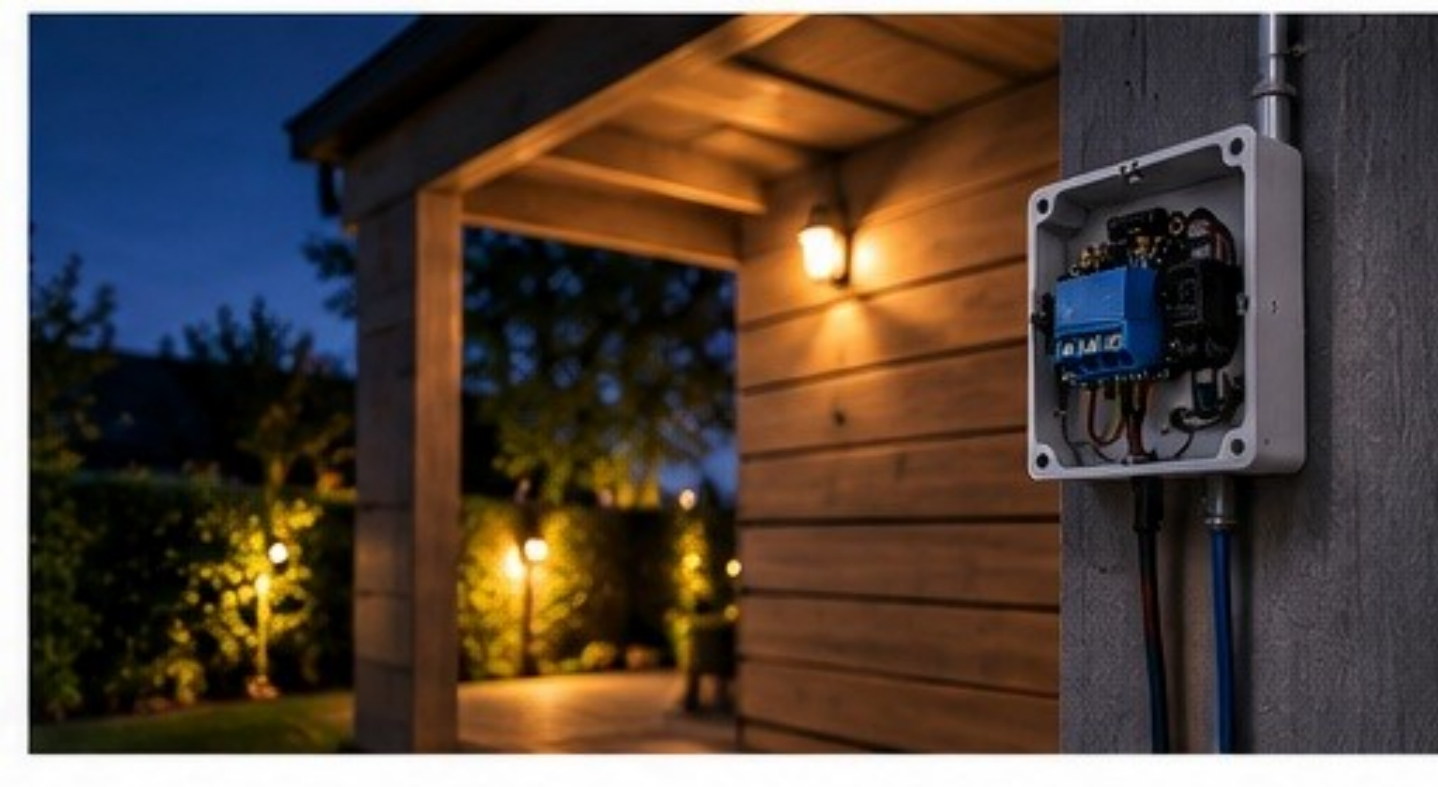
Check whether a neutral conductor is available at the mounting point. Some no-neutral modules have limitations or need a bypass with small LED loads. The module, wire bends, connectors and heat clearance must actually fit the box. Use a suitable IP rating and enclosure in damp outdoor locations.
What should the wall switch do: toggle, edge, momentary or act as a detached input? What should the output do when power returns: resume its previous state or stay off? Always off may be safer for a pump. Also ask whether physical control works when Home Assistant, Wi-Fi, Zigbee or the internet fails. NO and NC are functional choices during faults, not minor wiring details.
With toggle, the wall switch directly changes the output; edge toggles whenever the switch changes; momentary suits a push button; detached uses the input only as a signal. Make a deliberate fail-safe versus fail-secure choice: a heat-demand circuit, water valve, magnetic lock and outdoor light do not share the same safe failure state. A service or manual mode may be necessary for technical systems. Separately test what happens when Home Assistant is down, local radio/network is lost, internet fails and mains returns.
In Home Assistant, both solutions usually appear as switch entities. Switch as X can present a switch as a light, fan, cover or valve. A plug with energy sensors is often the fastest way to add device consumption to the Energy dashboard. A PM relay and a dry-contact relay are not automatically the same device. A simple overnight rule for AV equipment differs fundamentally from a safe pump or boiler control, which needs conditions, feedback and fallback.
The official Shelly integration communicates locally with supported devices and does not need the cloud for control. A simple, non-critical timer can look like this:
alias: Turn off AV equipment overnight
trigger:
  - platform: time
    at: "01:00:00"
action:
  - service: switch.turn_off
    target:
      entity_id: switch.av_cabinet
mode: single
Do not start with such a simple timer for a pump, boiler or other critical load.
Checklist before buying
- Is it a plug-in appliance or fixed installation? Do you need switching only, or W/kWh measurement as well?
- Is the load resistive, capacitive, inductive or mixed; what are the nominal and inrush currents?
- Do you need a dry contact, and is NO or NC functionally correct during a fault?
- Is neutral present; does the module physically and thermally fit alongside wires and terminals?
- Must the wall switch keep working, and what state is safe after power restoration?
- Will local control work without cloud or Home Assistant?
- Is a contactor, manufacturer interface or native protocol more appropriate?
Work on fixed 230V installations requires suitable materials and expertise. Have a qualified installer perform or check the mains work if you are not qualified. Never bypass existing protection.
Further reading: Home Assistant Switch, individual device energy, Switch as X, Shelly integration, Plug S Gen3, Pro 1 and 1 Gen4. Product ratings vary by revision; always use the current datasheet and wiring diagram. The source guide consulted these documents in September 2026.