A smart home does not automatically save money. It can help prevent wasted energy: heating an empty house, lighting an unoccupied room or running an appliance at an expensive time. Measure first, then automate. In Home Assistant, a simple rule is IF something happens, optionally CHECK a condition, THEN perform an action.

For scale, 10 watts running continuously uses 87.6 kWh per year. At an example price of €0.30 per kWh, that is about €26. Actual savings depend on your home, tariff, equipment and habits; these examples are not guaranteed savings claims.
1. Lower heating when nobody is home
IF the home really is empty or everybody is asleep, CHECK the current temperature and THEN lower the setpoint. You need a controllable thermostat and reliable occupancy detection. Do not let the house cool excessively: that may be uncomfortable and is not automatically more efficient.
2. Pause heating when a window is open
After a door or window sensor reports an opening for, say, two minutes, pause or lower heating in that room. Restore it when the window closes. A short delay avoids disrupting the system for a door opened only briefly.
3. Use lighting only when needed
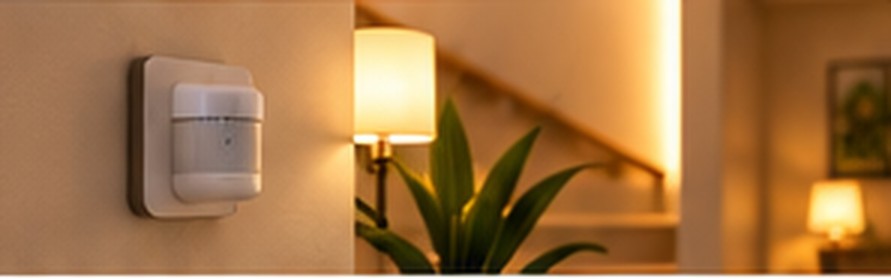
Combine motion with a light-level condition: IF someone enters and it is dark, turn on the light; switch it off after a suitable period with no occupancy. Set the delay for each room. Someone can sit still in a living room, so an overly short timer is annoying.
4. Safely cut standby consumption
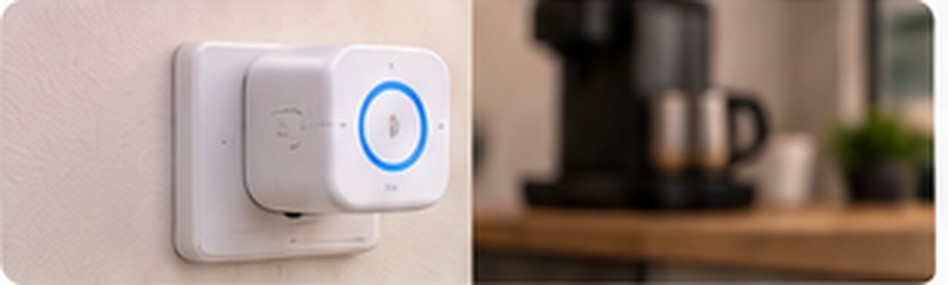
Measure first with an energy-monitoring smart plug. Only switch off appliances that can safely lose power completely. A continuous 25 watts is 219 kWh per year; multiply by your own energy price. Never blindly switch off a refrigerator, freezer, medical device, network equipment or other critical appliance.
5. Run laundry or dishes at a favourable time
With a dynamic tariff, you may use the same electricity at a cheaper time. Send a low-price notification or use the appliance’s built-in delayed start. Not every machine can or should be started through a smart plug; many do not resume a programme after losing power. With a fixed tariff, shifting the time usually brings no price benefit.
6. Use surplus solar power
Read solar production and grid import/export. Start a flexible load only when the surplus is large enough and lasts long enough. A threshold and delay prevent constant switching as clouds pass. The financial benefit depends on your contract and export value.
7. Schedule a boiler safely
A controllable water heater may be able to heat when electricity is cheap or solar output is high. Keep temperature limits, hygiene and legionella programmes, and device safeguards intact. Use only suitable, safe control with adequate temperature and status information.
8. Boost ventilation when needed
Use CO₂ or humidity to increase ventilation temporarily, then return to the normal level. Air quality comes before energy savings: do not leave basic ventilation switched off to save a few watts.
9. Use shading intelligently
Close blinds or curtains when sun exposure and indoor temperature rise in summer. In colder periods, solar heat may be welcome instead. For external shades, wind sensors and manufacturer safeguards always take priority over a Home Assistant rule.
10. Alert on unusual energy consumption
Compare an appliance with its normal pattern and start by sending an alert if it uses much more power or runs much longer. The Energy dashboard can help inspect the pattern. Let a person decide what to do; automatic hard shutdown is often less safe when behaviour is unexpected.
Where should you start?
Start with one familiar problem. Lighting gives immediate feedback, a smart plug helps you measure first, and occupancy-based heating can be the next step. Solar surplus, dynamic prices and boilers require more reliable data and safety attention. Keep ordinary switches and a manual override available. The best automation quietly works in the background.